
LISU DRESSES
The Art of Lisu Textiles: A Legacy in Every Stitch
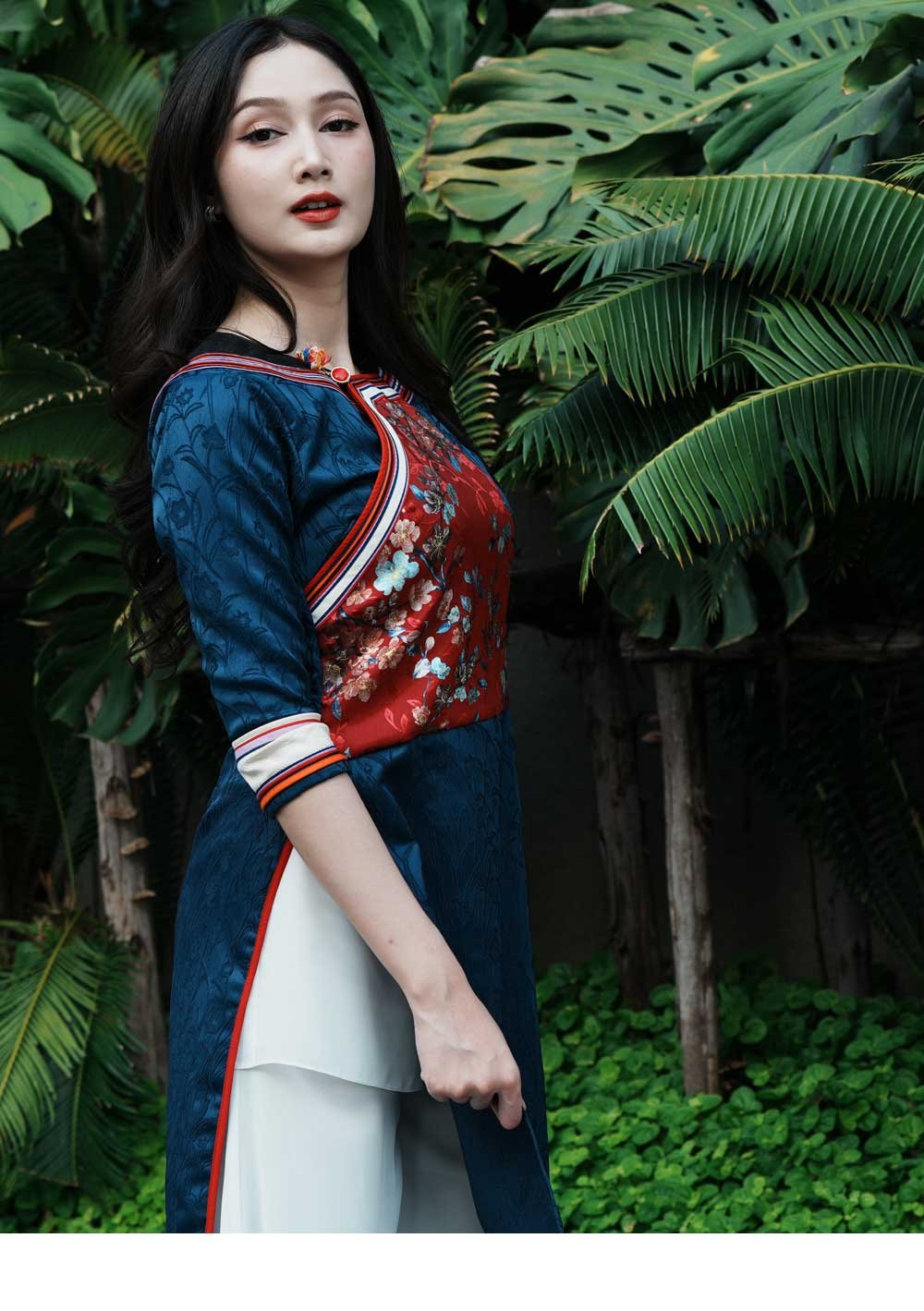
The Lisu traditional dress is a unique masterpiece of textile art, reflecting the deep history and culture of the Lisu people. It is widely regarded as one of the most difficult patterns to sew. More than just a garment, Lisu textile art is a complex assembly of colors and patterns—a testament to the identity and dignity of the Lisu people.
Craftsmanship and Technique
Lisu attire is renowned for its vibrant colors and intricate appliqué work. While some elements are hand-woven, the signature look comes from the meticulous technique of cutting bright fabrics into tiny strips or pieces. These are then layered and arranged by color to create fine, detailed patterns. Once these panels are complete, they are integrated into the dress, primarily around the collar, shoulders, and sleeves.
The Challenge of Mastery
Not everyone can master Lisu appliqué. The curved stitching around the collar is the ultimate test of a tailor’s skill and patience. It requires absolute precision; if the curve is not perfect, it ruins the structural integrity of the entire garment, forcing the maker to start over from the beginning.
Today, those who still weave and sew by hand are becoming rare. Lisu dress is an analytical feat of proportion and composition—a heritage from the ancestors that persists even as the world changes.
Selection
Choosing the specific patterns and color palettes.
LAYERING
Cutting and stitching fabrics in alternating layers to build the motif.
LEGACY
Every pattern carries a story passed down through generations.

A Personal Journey of Preservation
My motivation for creating Lisu attire stems from a desire to preserve our culture for the long term. This journey began with learning from my mother, who taught my older sister the correct traditional techniques. My sister further honed her skills by learning from the village matriarchs and through tireless trial and error.
The difficulty cannot be overstated:
Time: A single piece can take over a month to complete, even for those with experience.
Perfection: Skill does not guarantee success. Every component must harmonize perfectly to create a single, flawless garment.